In the Narok region of Kenya, where access to emergency health assistance is a long shot, owing to the rough roads and unreliable power supply, a unique solution came handy. Stella Juva, developed by Solar Team Eindhoven, is a solar-powered mobile clinic that generates more energy than it consumes while stationary, allowing it to run X-ray machines, ultrasound equipment, and vaccine refrigeration entirely off-grid. It not only brings health workers to remote communities, but also the power and medical equipment needed to examine and diagnose people on the spot.
In its first practical test, Stella Juva covered more than 800 kilometers over 2 days, the intervention demonstrated that it could deliver care to nearly 200 people, including ultrasound scans to up to 40 pregnant women. But what Stella Juva truly offers is a reordering of assumptions about who deserves care and what it takes to reach them. An ambulance is not a novelty, nor are the devices mounted onto the vehicle. But the true innovation is in imagining the possibility of such superior care reaching an otherwise marginalised region. The innovation is in seeing that nobody can be ignored when it comes to providing quality healthcare.
“Innovation needs preparation, collaboration and the light of the soul.”
— Amit Ray
The National Health Innovation Conclave 2026
Indian healthcare innovation today, stands at a fascinating inflection point. We possess world-class engineering talent, a rapidly expanding startup ecosystem, and an immense clinical depth. Yet, groundbreaking health tech solutions are lacking momentum while reaching the patients who need them most.
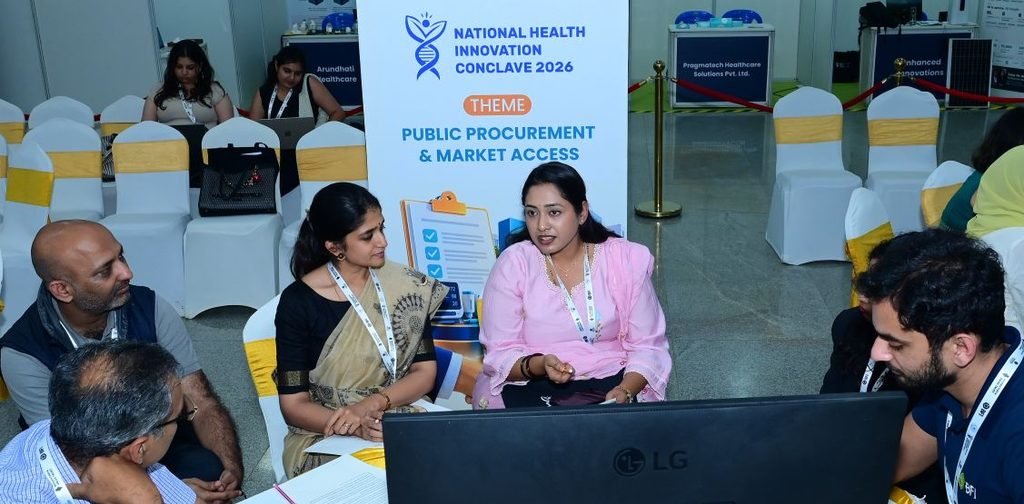
Bridging this gap was the central focus of the National Health Innovation Conclave 2026, held today at RGUHS, Bengaluru. Co-organised by the Bharathiya Vikas Trust (BVT) and CHARAKA, and supported by Blockchain For Impact (BFI), the conclave brought together nearly 100 key stakeholders—from government policymakers and medical institution leaders to founders and enablers.
Having participated as a mentor for Public Procurement and Market Access Dialogue, the discussions reinforced a core belief that defines our work at Aikya Consultancy: sustainable, systemic impact cannot happen in silos. It requires a deliberate architecture of collaboration across Sarkar (Government), Samaj (Society/Corporates), and Sanstha (Social Service Organizations).
The key insights emerging from the session highlighted several systemic roadblocks in public procurement:
- The Risk-Averse Procurement Paradigm: Public health procurement frameworks traditionally prioritize legacy L1 (lowest bidder) metrics and established medical device giants, making it exceedingly difficult for indigenous, novel health-tech startups to break through.
- Mis-match in technical specifications: Even in case of QCBS tenders, the technology specifications sought by the government are often restrictive and not accommodative of novel technologies that startups offer.
- Un-fulfilled Eligibility Criteria: The tenders often expect applicants to show previous proof of supplying at scale to the system. This defeats the whole purpose of opening up opportunities for startups
- The Validation-to-Scale delay: Even when startups successfully pilot a technology, scaling it across state or national public healthcare networks lacks standardized integration pathways and predictable procurement pipelines.
- Information Asymmetry: Buyers (public health administrators and institutional heads) often lack real-time visibility into homegrown innovations, while startups struggle to navigate complex government tendering lexicons and compliance frameworks.
A Design Thinking Lens: Empathy, Definition, and Systems Architecture
During the discussions, several key inputs from the speakers at the table enabled different perspectives to blend together, ultimately offering novel solutions to these critical problem areas.
- Empathy (Mutual Empathy for Understanding the Stakeholder Reality): Startups often consider the government and its systemic inefficiencies only at the final stage after developing a prototype. They frequently lack perspective on what it means to operate a system as massive as the government; having earlier visibility into these administrative processes would help them align their innovation’s documentation well in advance. Similarly, while government departments work with these procedures and rules on a daily basis, they may still not be fully aware of certain nuances. To expect a first-time supplier—especially a startup—to navigate complex procedures without clear or easy access to information is unrealistic. Integrating AI chatbots for seamless information dissemination and simplifying complex rules into common, easily understandable language can go a long way in helping these two entities work better together.
- Definition (Framing the Right Problem Statements): As explored across the conclave’s thematic roundtables—ranging from clinical validation and regulatory pathways to medical college incubation—we must stop treating symptoms. The lack of market access isn’t just a tendering problem; it is a direct manifestation of misaligned feedback loops between clinical users, procurement authorities, and manufacturers early in the R&D cycle. Startups currently lack clear visibility into the specific problems the government is trying to solve, while governments lack visibility into the problems that startups have already solved. This is exactly where Centers of Excellence (CoEs), incubators, and accelerators must bridge the divide. A simple, accessible repository of problem statements sourced from relevant government departments, paired with a repository of startup innovations made available to policymakers, can be an absolute game-changer.
- Ideation & Prototyping (Policy Sandboxes): Just as technology startups prototype software, governance models require “policy sandboxes.” We need structured mechanisms where public hospitals can trial indigenous MedTech solutions under controlled parameters. This will generate vital real-world evidence (RWE) that feeds directly into procurement eligibility criteria, creating a smoother pathway for adoption.
The Vision: Tripartite Synergy for Health Security
The National Health Innovation Conclave powerfully demonstrated that the future of India’s health tech ecosystem depends on three strategic shifts:
- Institutionalizing Medical Colleges as Innovation Hubs: Embedding entrepreneurship and incubation directly within institutions like RGUHS ensures that innovations are born at the bedside, shaped by real clinical pain points rather than abstract market assumptions. Empathy then becomes a cornerstone for innovation.
- Democratizing Market Entry: Creating transparent, merit-based pathways in public procurement that reward clinical efficacy, cost-effectiveness, and local manufacturing resilience, allows for government to scale solutions for the larger public good.
- Collaborative Execution: Moving away from fragmented grants and isolated pilot projects toward unified, outcome-driven consortiums supported by catalytic enablers like BFI, CHARAKA, and BVT, can take the Med-Tech sector in India to its true potential.
While these were some of the key points discussed at our table, the vision of the larger conclave was clear: translating the day’s insights into actionable policy frameworks requires sustained effort, relentless stakeholder alignment, and a deep commitment to human-centric design. The conclave’s diverse stakeholder attendance was proof of the initial buy-in, which acts as a foundation for the long journey ahead in truly realizing the complete potential of MedTech innovation in India. Every speaker resonated with a shared urgency to transform India from a consumer of global medical technology into a global exporter of accessible, high-impact health innovations.
Having shared a summary of the conversations that transpired in the conclave, it is evident that the event addressed the core tangible, quantifiable issues of the sector. Several actionable outcomes emerged that could enormously transform the healthcare innovation landscape of the country. However, there is one subtle thought that has lingered in my mind post-conclave. It is not so much a matter for formal debate at a policy reform conclave, as it is food for thought for innovators and policymakers alike:
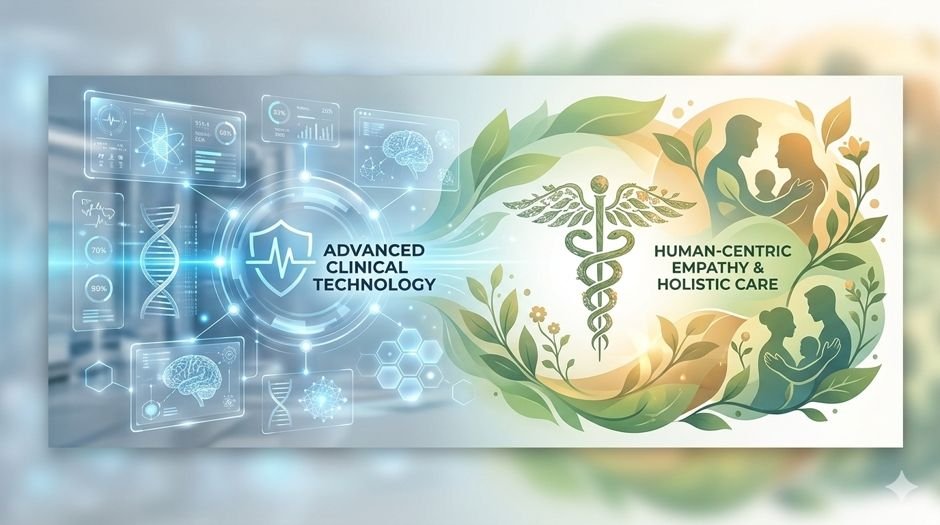
Technology can make healthcare more accessible, preventive, and humane—but it must remain a tool in the hands of compassionate people.
I see its greatest value in reaching those who are otherwise left behind: enabling tele-consultations for remote communities, deploying mobile diagnostics, ensuring better coordination of care, and leveraging health data to help us identify risks early. Predictive and precision medicine can help us understand who may be vulnerable to disease, allowing us to intervene before a condition escalates into an emergency. In a populous country like ours, prevention is not merely preferable; it is absolutely essential.
Similarly, artificial intelligence can help analyze large volumes of clinical and community-health data, support groundbreaking research, and strengthen frontline health workers. But it can never replace a doctor’s conscience, judgment, or human touch. A truly robust healthcare system requires competent technology and compassionate, well-trained professionals working in unison.
We must also use technology responsibly: protecting patient dignity, avoiding the trap of treating people merely as data points, and ensuring innovation reaches rural and underserved communities rather than widening the gap between the privileged and the marginalized.
While our efforts remain sustained toward creating cutting-edge technological interventions that can act as a game-changer for healthcare in India, an equal—if not greater—amount of focus must be dedicated to building conscious ecosystems. Inclusion, empathy, compassion, and a genuine willingness to care must be the rock-solid foundation upon which innovation and process excellence are built to achieve a truly sustainable healthcare system.
